One might ask what photography is. What is the purpose of taking a photograph? For some, just a simple snap shot will do but, for others, there is more of a destiny to experience in the photograph. Photography captures a split second in time or, simply put, a moment captured in a blink of an eye. Photographers create illusions of realism which resembles the existent world with content and form that are inseparable. In effect, the photographer has generated a story all their own.
Photography is made from anything perceived. Seeing is believing when the moment is captured on film regardless of the subject matter. No matter how many pictures are taken of the same subject by different individuals, the photographs will never be the same “style” because the subject is in the eye of the beholder. For example, you may like that shiny red 57’ Chevy in the front of the coffee shop, so you take a photograph. Your friend loves the seat in front of the coffee shop window with the reflection of the 57’ Chevy in the glass. There are two distinctly separate shots of the same subject but, emotionally, they are very different images. No two artists are identical and different viewers will never see the same photograph in the same manner. Photographs generate a mood that creates an emotion and they can be background or landscapes or nothing but a mere rust spot with texture.
Photography not only captures that instantaneous moment in time but also captures a visual reality. Photography, when it was first invented, was used to represent the world accurately with little room or depiction of artistic ability. Thus, the photographer could have been anyone in the crowd, and that person brought forth the way things looked at the time—showing the world what is to be perceived.
This is not the ways of photography in the 20th century. Photography is now a truly unique art form, and a photograph can hold two and three dimensional space, as well as a one point perspective. Photography gives us the opportunity for aestheticism our everyday world. Our attention is focused on what we would normally dismiss our attention focuses on seeing beyond the believable giving a visual sensation to our minds. A photograph can be captured in one-sixtieth of a second by the shutters of the camera. In effect, art happens in the “blink of an eye”.
Since Kodak introduced the first hand held camera in 1888, giving photography a new mission and meaning, the world has never been the same. However, the technological advances have affected photography. It has strengthened the use of a camera and allowed the photographer far more precise subjective perceptions of the subject matter. According the book The World of Art, Life Magazine started publication in 1936, and American photography used photography as their tool of disclosure. “Pictures can be beautiful, but must tell facts too,” reveals the text. Photographers must include real life recognition with lines and rhythms of the surface because, without this, the photograph would be unresponsive. As an interesting insight, a horizontal photograph is peaceful; a photograph with less foreground brings dramatization and a photograph with more foreground shows nature connected with unity.
Photography is different than other art medium, yet the classical compositions brought together by the artists of yesteryears are still used. Photography has many techniques and art forms that differ greatly. For instance, there is black and white photography that the photographer can develop easily in even a small amount of space. According to photographer and Professor of Art Mike Wonser, a dark room can be set up in a bathroom. The light must be blocked out, but the photographs can be developed in the bath tub! So, you do not need much space to work and it is magic to watch the photograph appear. Another simple technique was shared by George Jolokai. He stated “a photographer can carry a bottle of water to add shininess or reflections on the subject matter”. The magic of photography is endless.
Another tool used in photography is the use of slow or fast shutter speeds. Slow shutter speeds can blur water, but the use of slow shutter speeds requires a tri-pod to prevent blurring the entire photograph. The water will blur because water is in constant motion but the background or other subject matter in the photograph remains still.
Another form of photography is that of color photography. Color brings depth and musical rhythm and is a very powerful tool to the human senses. Color photography creates a complex interplay between form and content that can create dynamic color contrasts. The photograph process takes time because critical technical decisions must come from the photographer before the release of shutter that results in the capturing of an essence of time and mood on film.
The basic elements of style, composition, and technique are the photographer’s tools for structure; it is the photographer’s imagination that leaves an impression embedded the minds of the viewer.
References
Joloki, George (2004, Spring). Lecture Art 101, Central Oregon Community College, Bend< Oregon
Sayre, Henry M. (2004) A World of Art (4th ed.) Pearson Prentice Hall.
Wonser, M. (2004, Spring). Art History 203, Central Oregon Community College, Bend< Oregon
Wednesday, March 16, 2011
Photography Insights and Techniques

Where to Find Great Black and White Photography Online
Black and white photography looks great in any décor. You can find just about anything, in any size, to match just about any room. Plus, the neutral tones of black and white photography ensure that it will match just about any color scheme. Here are some of the best places on the web to purchase black and white photography.
AllPoster.com
AllPoster.com is a fantastic site for cheap artwork. Now, cheap doesn't mean poor quality - quite the contrary, in fact. You can find just about anything - traditional paintings, classical art, black and white photography, large posters of bands, musicians, movies and more. They also offer framing.
My Top Pick: "City Street Signs" by Nelson Figueredo - $24.99 (Price doesn't include shipping and handling, or optional framing.)
Why I Chose This Piece: I love New York, more importantly - I love Broadway. Of course, Broadway and West 34th Street is practically the center of the theatre district. It's a great way to bring a little bit of Broadway right into my own home.
The Wall Art Store
This online store has a lot of fantastic, very 'artsy' black and white photos. They offer free shipping and all of the photos come framed, they even offer a few different selections for matting and frames. However, prices can run you from $55 dollars and all the way up to $919. Ouch. However, the quality is very high - so you can be sure you're getting your money's worth.
My Top Pick: "Stonehenge Sunrise" by Matthew De Haven - $50.00 (Price does not include shipping, handling or frame.
Why I Chose This Piece: I love Stonehenge, it's a fascinating place. The fog adds to the mystery of the structure and it's a great piece to add to a global photography collection.
Artful Home
This website offers a lot of wonderful photographs, but the prices run fairly average. The bottom line photographs start at $110 dollars and run up to several thousand dollars - so this isn't the most budget friendly site. However, if you've got the extra cash lying around, it's a great option and chances are you'll spend similar amounts at local art studios, especially if you live in a metropolitan area.
My Top Pick: "Winter Trees I" through Phoenix Galleries - $299.00 (price includes free shipping as well as framing and matting.)
Why I Chose This Piece: This particular photograph would be great for my fiancé's office. He loves the look of trees in the winter, so this is a great piece for him.
AbsoluteArts.com
Absolute Arts caters to the United States, the UK, China and more - and their prices range anywhere from $10 to $1,000,000. With more than 2500 works of art, you'll be sure to find exactly what you're looking for with this website.
My Top Pick: "Merced River Ice" by Ron Gallmeier - $330, Small; $665, Medium; and $1000, Large.
Why I Chose This Piece: Again, this is another piece I know my fiancé would really appreciate. Plus, I love the look of the water, the snow and the trees - so it's something we would both really enjoy in any room of our home.
So whether you've got $10 or $10,000 - you'll be sure to find the ideal pieces of black and white photography to fit your home décor and personal tastes.
Art Without Attitude

source
One of the newest additions to the vibrant art scene in Philadelphia is WALLS at Wexler Gallery, an exhibit that features high quality, yet, affordable paintings, prints and photography. “It is New York sensibility without New York attitude,” says Lewis Wexler, founder and proprietor of Wexler Gallery. WALLS Curator Sherri Apter Wexler, wife of Lewis and co-owner of Wexler Gallery, is excited to offer Philadelphia art lovers great pieces of art without attitude and high price tags, and hopes that this concept will appeal to fresh young crowd of first-time buyers. WALLS made its debut during the First Friday in May, the once a month, widely attended cultural event hosted by the Old City Arts Association. This upstairs extension of the Wexler Gallery was meet with immediate success, selling several pieces in their opening night. “We really touched on something here,” says Sherri. WALLS is fresh, affordable and offers a relaxed and inviting atmosphere where questions are encouraged no one is too green to appreciate or buy art. This is a gallery where it is possible to walk in, see a painting that you love, and go home with it that day; all without putting a painstaking dent in your pocket. Presently, WALLS includes 8 artists, exhibiting four to five pieces each. The overall focus is on creative two-dimensional art that is both accessible and easy to live with. Current work on display ranges from $400 to $5,000. While many galleries offer a wide range of prices, with a few affordable selections, the mission of WALLS is to offer a large body of work that consists entirely of affordable art that will interest first time buyers, while maintaining a level of quality that will also attract and impress seasoned collectors. Artists currently on display include Chris Anderson, Jenny E. Balisle, Philadelphian Kevin Cooper, Daniella Woolf, Eileen Goldenberg, Tanja Softic, Mark Bennion and Lisa Tyson Ennis. One of the unique points of WALLS is that it feels more like a well decorated loft space that a gallery. The beautiful section of art is highlighted and enhanced by furniture and decorative pieces, giving the buyer an idea of how the painting may fit into an overall design scheme. These vignettes construct an inspirational visual field, sparking new ideas and create an innovative showroom environment. Additionally, both Sherri and Lewis are willing to help any buyer find the right piece and the right fit for their home. This new addition to Wexler Gallery has hit the ground running and shows no signs of slowing down. WALLS is an ideal complement to the Wexler Gallery’s collection of fine contemporary glass, studio furniture, ceramics, jewelry and decorative arts from some of the world’s most esteemed artists working today, including Wendell Castle, Albert Paley, William Harper and Dale Chihuly. If you are tired of staring at that bare wall, but though you could never afford real art or fit in into the prestigious art gallery scene, WALLS is a great place to start. The Wexler Gallery is located at 201 N. 3rd Street in Philadelphia, Pennsylvania. They were recently awarded the “Best in Philly” award for art gallery.
Friday, March 4, 2011
Why Not Let Your Baby Cry
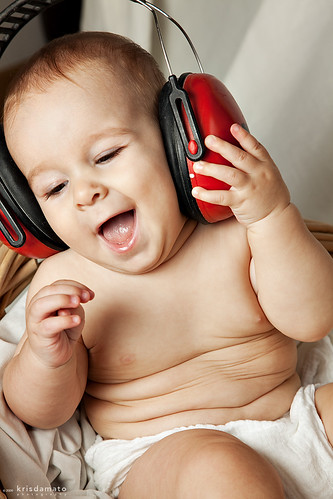
celtics baby clothes
New moms and dads seem to feel that they have to keep their baby from crying. Every time their little one cries they come running. But in my own personal opinion it is perfectly ok to let your baby cry a little. Of course you do not want to let them cry all day long. Crying themselves to sleep is perfectly normal and ok. I have tried this with my children and it has really worked out well, especially at bedtime. What I do is follow my usual bedtime routine.
Give them their bath and then one final bottle or nurse them one last time for the night. Them I put them in their crib and let them cry just for a while. Every 15 min or so you will want to go and comfort them. It is important that if you are going to let your baby cry themselves to sleep that they are given comfort. I would also recommend covering their little hands so that they do not scratch themselves. They sell little mittens for infants or the shirts with the little hand covers attached. It is also a good deterrent if your child is starting to suck their little fingers.
No one is quite sure why we exactly do cry. Did you know that there are actually two different kids of tears? One is the Basal or continuous tears that moisten the eye, and the other is reflex tears which are caused when your eyes are irritated by some type of object. Some researchers believe that emotional tears or crying actually relieves the body of harmful and excess substances, in the same way the kidneys, and the lungs do. They are not exactly sure of the reason but evidently the body produces a tear in response to emotion that is different from the kind in response to irritation. From the moment a baby is born they need tender care. Many people feel that if they respond to a crying baby they will be spoiling them. I am not sure, but I do know that no harm can come to them by just letting them cry.
But you should keep in mind that when a child is hungry, uncomfortable or upset, the will begin to cry. You will want to make sure that you check all of these things before you let your baby cry themselves to sleep. Some researchers seem to believe that babies who are responded to quickly during the first 6-8 months of life actually cry less than babies who have been left to cry. Of course they cry less since they are constantly being picked up. There are times when just acknowledging their cry with your own voice will be sufficient. Just a simple touch can help to provide comfort.
Believe it or not it is a baby’s job to cry. At least that is what many of the parents that I have spoken to seem to thing. You do not want to let the baby cry all the time. For example I only allow my baby to cry at bedtime for an extended period. I believe this will help him to learn what bedtime means. When the baby is constantly being rocked to sleep, as they get older they will not understand why you will suddenly stop. And you will probably have a very difficult time putting your one year old baby to sleep. Keep in mind that crying is how babies communicate what they want. The bottom line is you need to help them understand when it is time to play and when it is time to sleep.
Sunday, February 27, 2011
Starting Your Own Professional Photography Business

Photo Credit: celtics baby clothes
So now you have the desire and determination to make it work, but what will you do? Photography is your passion, or is it? There are hundreds of photographers out there no matter where you live; what makes you so different from all the other photographers?
* Do you have the unique style necessary to attract the crowds to your camera?
* Can you survive in the cut-throat business of shooting day in and day out whoeversteps in front of your camera?
* Are you original and creative enough to think of different poses, create various styles of portraits of babies, families, couples and single people and still think sanely?
If you answered these questions positively, you may be on your way but that’s not all it requires. Though photography seems a fairly easy business where in movies and television you see a young man photographing beautiful women in studios or on exotic locations, selling all the images to magazines or having huge billboards displaying his pictures, that’s just a dream. Reality can be quite different from what many think of this profession.
It takes more than a fancy camera in this day and age to make a person buy your pictures, let alone to make a business out of it, surviving on income made with your photography. If you live in Spain or anywhere else, if there’s other photo studios then you’re competing against those already established with a good clientele. How can you compete against them?
Here are some recommendations to help you build your dream of working as a photographer:
a. Create an unique style that stands out from the other photographers
b. Be professional at all times
c. Display only your best images to possible clients and change these often
d. Offer specials to advertise yourself and your photography
e. Have exhibits of your photography to help spread word of your new business
f. Be patient and be sure to have a good supply of backup funds in the case they don’t come
Let’s discuss the above points…. This will help you to understand how to succeed.
Look at those you will be competing against; what do they offer in their photographic services? Can you offer the same or more? Most importantly, how does your style of capturing a scene or a face stand up against theirs? You will need to establish that style before you can start with a business. Be sure in what you do and do only that.
When you work with a client, you must maintain a professional environment at all times. In my many years behind a camera, I have seen amateurs make many mistakes during events, weddings and other assignments. In some cases, it wasn’t a mechnical or technical error but a public relations mistake – some people just don’t know how to work with the public. If you do the same, you will not last for very long. While people talk a lot of good images, they talk even more about how terrible a session was. You don’t want that type of advertisement. Research your assignments, know the light. If you have new equipment, then be sure you know what they can do and how you can use it. There’s nothing worst than finding out the hard way a flash or a new lens isn’t completely “right” in your hands.
Advertising yourself is the most important thing you can possibly do; no matter how good (or bad) you think you are, if nobody knows of your services or product, then you wont sell many if at all. When you display a poor image, then others will see the faults also – never display an image that is in bad taste. Show only your best work and watch people contact you. If they see bad results, they will stay away. Your best form of advertisement is word-of-mouth from a satisfied client!
While you may be one who doesn’t believe in the “store specials”, this method of advertising does work, and you can make it work to your benefit. A special attracts people who normally wouldn’t buy a product but does due to the price offer, or does buy and sees a special pricing as a reward for their loyalty. Act on that thought and you will see more customers contacting you!
Many people go to art exhibitions to see art – when this exhibit involves portraits of people for example, it can draw in customers from a different area you never thought possible. While many go for two main reasons – to see art and enjoy it, or to buy art for themselves – having an exhibit consisting of portraits for example, encourages possible interest in becoming a subject for your camera. It also works in a different direction, establishing your track record and building on your resume to show people interested in your experiences and awards, etc. in photography.
Lastly, starting a business is not easy or as “easy” as you may think photography may be. This profession is no exception to the rule. These days everyone having a digital camera makes them a “photographer”. Who will pay you to create their memories to last a lifetime? Before you actually start your new life in photography, be sure to have a good sum of reserve cash banked away to maintain your living expenses through the lean months – if that is the case. In most new businesses, the first two years can be the hardest and patience can save your sanity! The biggest mistake here is that after two or so years of little or no business, new businesses will close, but that is wrong! That’s the worst time to close as now you already have yourself in people’s minds: seeing the storefront, knowing you’re a photographer, etc. stick it out just a bit longer!
Baby Photos and the Art of Photography
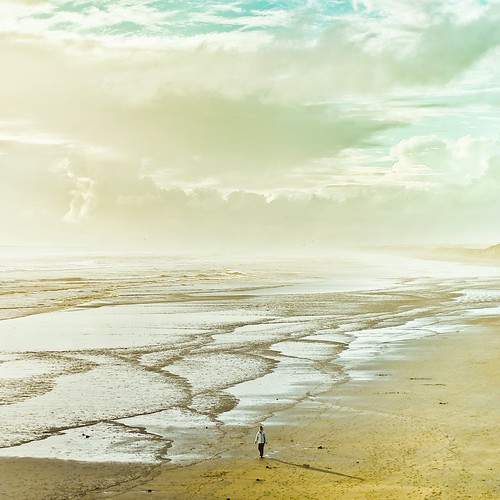
photo source
"Seize the Moment" This is one of my favorite sayings. How often do we take advantage of the MOMENT? The moment is instantaneous. What happens right now will not happen again, ever! Will you remember the moment?
Photography is the art of capturing an image of that moment. It could be a face, a plant or a mountain. It could be something that will be there tomorrow but will look different or it could be something that won't be seen again. I read in a comic book once of a conversation between a father and son. The young son asked his father why old photos were always in black and white and new photos were in color? His father said there was always color film in the old days, but the world was only in black and white then! It was funny but some of our most famous photography "artist" worked in black and white such as Ansel Adams. He and so many others were artists that couldn't make up their work but had to capture it at the right instant of time.
I was going through some photos with my wife the other day. Some of them would take my breath away. They were images captured in time of babies in our family. Some of these babies are now 5, 8, 10, 14, 17 years of age. They are my children, nephews and nieces. Some of them are of my wife and her sisters. They're baby pictures! They are an instant caught in time. They were either taken by my in-laws or given to them as gifts. They may not have been present at the time the photo was taken but they had that image of that instant in time to carry with them until they died. These images were no different than the images that Ansel Adams gave me as a gift when he photographed San Francisco bay where the Golden Gate Bridge is before it was built. He gave me a memory that I could not have had otherwise. My family and my sister-in-laws' families gave my mother -in-law and father-in-law memories that they would never have had if it weren't for photography.
Even if you aren't a great photographer, a picture is still worth a 1,000 words. When a newborn baby comes home from the hospital and the family and extended family come by to see him or her, what comes out? Of course, the cameras come out and start snapping. I learned two schools of thought from photographers that I took courses from. One was in a roll of 36 exposures, 34 better be the top quality photos that you intend to sell. The other photographer taught that in a roll of 36 exposures, expect 2-3 quality photos that are worthy of selling. What I learned from this is spend your time taking posed photos but keep snapping for candid photos.
If you are taking photos of babies or children, take your time for both types of photos. I personally do not like posed photography but that's me. I prefer to capture a child that is at play trying to solve a problem or just being natural. I like the expressions when they are deep in thought or interacting with other children. I found a photo of my son that I took through a car window when he was five holding his hand up with his fingers stretched out. That photo is so memorable to me because I sent it to my mother before she passed away. It was exactly the same photo that my mother took of me when I was five years old.
May I suggest that you seriously consider studying photography to get a better understanding of the capabilities of using a camera properly? If you are just starting out, you need to start with the basics and work from there. Here is a good site to learn various aspects of photography from: http://www.photographytips.com/ For some detailed photography, study someone like Ansel Adams and look at this website: http://www.anseladams.com/
Saturday, February 26, 2011
Tips for Breaking into Sports Photography
source,photo source
Winthrop University, Rock Hill, SC, student photographer Chris Osborne hopes his experience in sports photography will take him to the next level - his goal for every shot is "Sports Illustrated Cover".
Osborne explains how a sixth sense is valuable in sports photography, but without the basics of photography, you will still miss the shot.
What first attracted you to photography? How did you get started yourself?
Photography was something I could do since I have always been able to see how I wanted things to look. I have started and restarted a few times. My first camera was a 110 mm back in 3rd grade. I moved onto other interests until college, where I got a Coolpix L3. It is good for general use, but trying to shoot basketball did not work at all. So, I purchased a Rebel XT and have not looked back.
What photographers - well known or unknown - inspire you?
Beyond the sports photography culture, two unknowns got me where I am today. The first is my sister. She says that I stole her interest in photography and will not hold back any criticism of my work. The second is Paul, a fellow photographer at the school paper. After seeing one of his pictures in the paper and not liking it at all, I decided that I could do a better job and filled the other sports photographer position. Only later did I learn that an editor and not Paul made the cropping decisions.
What equipment do you use? Is there a certain piece of gear you could not live without?
I am currently using a Canon Rebel XT with the kit 18-55mm lens, Canon 50mm 1.8, Canon 75-300 4-5.6, and a Tamron 28-200mm 4/5.6. My only other add ons are a Canon battery grip and a polarizing filter. Being on a college student budget, I do not buy new equipment unless I will really use it. But if I had to pick one item that I couldn't live without it would be the battery grip. I missed too many shots by flipping the camera the wrong way to shoot vertically or simply missing the shutter button.
Do you have any goals in mind with your photography?
For my sports shot, there is always one basic thought running through my mind - Sports Illustrated cover. I would love to have one someday. For everything else, I think about if I could see the shot hanging on someone's wall. If I cannot, I find something that fits that requirement.
What do you feel are your strengths and weaknesses in sports photography?
As much as I hate to say this one, one of my strengths is that I have a camera that can handle the speed and lighting at college sporting events. Beyond that, I am able to have a personal relationship with most of the athletes and am able to predict fairly well what is about to happen. My weaknesses are that I am still too slow at times to get the shot that I want, despite knowing almost exactly what is about to happen and that I have a tendency to tilt my camera. Also, where the Winthrop athletic department lets me go during games limits what I am able to shoot.
What does it take to be a quality sports photographer?
To be a quality sports photographer, you have to be a little bit psychic. By that I mean that you need to be able to know where to point the camera to get the shot. Some sports are easier than others. What sports do you like to shoot? I like to shoot basketball and volleyball most. They are high intensity and usually have something new to get every time. I like baseball the least because most of the shots are just excessively similar.
What post-processing tools/software do you use? How much does that influence your photography?
When I want better control over the photograph, I will use Photoshop 7 or Gimp depending on which operating system I am working under (desktop runs XP while laptop is in the process of switching over to Linux). I use Picasa for basic editing such as cropping and overall brightness/contrast. I sacrifice the overall control for speed when I have to turn things in to the school paper.
What advice would you give new photographers?
A) Don't get discouraged. Photography is an art, which means you will have to work at it.
B) A good photographer can overcome bad equipment, and good equipment will not make you a good photographer.
C) Less time editing your photographs means you'll have more time to take more, so get things right in camera as much as possible.
D) Try to see all of what there is to shoot, not just the stereotypical snapshots that everyone else will find.
Check out Osborne's photography at http://sapidexistence.com
Stephanie Harrison Photography - Where You'll Find the Best Photographer in Town

credit
Whether you're looking for that perfect photographer for senior pictures, wedding photos, new baby celebration or special family moments, Stephanie Harrison Photography is the place to go! You'll not only find a professional studio that is conveniently located in the heart of the Historic Depot District in Richmond, Indiana, but you'll meet one of the friendliest, easy going photographers around; not to mention at a great value!
The photographer at Stephanie Harrison Photographer, none other than Stephanie Harrison herself, offers an artistic style that can't be found elsewhere. The results of her work give an eclectic, non-staged, and real feeling. She captures expressions and movements perfectly in her photographs. She's got the perfect personality for children and adults alike. She can accommodate any situation from serious, quiet moments to doing whatever is needed to get an unsure baby to smile, make nervous folks feel comfortable or even catch that wondering gaze of a beloved pet.
Photos aren't always taken inside the studio at Stephanie Harrison Photography. The opportunity is also there to go outdoors and use the resources of the Historic Depot for a more urban look, combining the exposed brick of old buildings with the sweet, fresh face of a new baby, for example. Stephanie is also often available for on-site shoots for weddings, special celebrations and other purposes!
Stephanie Harrison has the experience to make your photo shoot the best it can be! She's been featured in a number of magazines across the world and has won various photography awards. With such skill and recognition one might think her prices would reflect it, but at Stephanie Harrison Photography, the value is unreal!
The session fee is a very reasonable $40.00 for up to four people. Prices for prints obviously vary by size but range anywhere from $8.00 for eight wallets up to $90.00 for a huge 20x30 print! She offers packages for senior pictures starting at a low $99.00 and Wedding Packages that can be had from $550.00. Also available are Gallery Canvas Wraps in various sizes which are, simply put, awesome!
Stephanie Harrison Photography can be found at 195 Fort Wayne Avenue in Richmond, Indiana and reached at (765)962-3133. The website, www.stephanieharrisonphotography.com offers numerous examples of Stephanie's work, a price sheet, bio, and contact information for setting up your first session.
Stephanie Harrison Photography; you simply won't find a better photographer around!